
If I am honest, thinking of education as a ‘market’ is something that makes me feel really uncomfortable, however, the principles that underpin strategy are as relevant to this sector as any other, providing suitable context and nuance are added.
Considering that in education has seen it’s biggest trend in a generation then examining how we could or should respond to it and plan for the future in response to it needs to be through. Given that other organisations have more experience in responding to majorly changing trends, lots can be learnt from the private sector.
Agent-Based Models of a Banking Network as an Example of a Turbulent Environment: The Deliberate vs. Emergent Strategy Debate Revisited – Duncan A. Robertson
Deliberate vs emergent strategy is a dichotomy that needn’t be. In our context in the education sector utilise the foundations of deliberate strategy whilst having the agility of emergent strategy is useful in responding to our ever changing situation, particularly during COVID.
This paper looks at a specific example of banking, whilst removed from education, as a private sector organisaiton, it provides insight in to the debate. They suggest that mergence is of greatest profitability during tubulent times.
Under a customer-centric strategy, however, the model suggests that there is a benefit from adopting such a strategy when there is a turbulent environment (i.e., there is a likelihood of greater profits resulting from following this strategy in a turbulent environment as opposed to a nonturbulent environment).
Robertson, 2003
Bradley, Chris., Hirt, Martin., Smit, Sven. Strategy to beat the odds. Mckinsey Quarterly, 2018.
This article feels very much rooted in business, and I struggled to make many explicit links to education. The main thread is that how we develop strategy is as important as the strategy itself.
The key points are:
Due to our inherent human nature of bias, personality conflicts and ego it is diffcult to get a truly coonducive strategy in the ‘the strategy room’ when it exists as an event. Rather, strategy should be a process, with in built evaluation.
Fyrther to this they examine 3 categories of ‘big moves:
- Endowment: Which is what you already have
- Trends: The changing conditions for your organisation
- Moves: What you actually do. This is what truly matters.
The less favourable your endowment and trends are, the more moves you have to make, but they can be overcome.
Added to this are the 5 moves that you can make:
- Investing in marketing and advertising
- Being agile with your resources
- Increase spending where essential, but spend it well
- Streamline processes to increase efficiency
- Diversify
The moves made during COVID have been significant to cope with the trends of the current situation. For example increasing spending on IT equipment, for the school building (eg server switches etc) staff resources (eg new laptops) and student laptops (to ensure all have resources). This has served several big moves, both increased spending where necessary , being agile with resources, diversifying and streamlining processes, given the efficiency of newer equipment. Further to this, we added training in new online software, ensuring access to education was suitable and streamlined for all.
Bungay, Stephen. 5 Myths About Strategy. Harvard Business Review, 2019.
This article challenges some common misconceptions and challenges certain beliefs around strategy.
1.) Strategy is about the long term: Here they argue that challenging assumption aids change. Therefore, having a long-term binding strategy is not conducive to competitiveness, therefore using both deliberate and emergent strategy is imperative.
This has been particularly important during COVID times. Whilst having pervading strategy reflective of school culture is imperative, being agile and responsive enough has been imperative to successfully responding to the challenges of the changing COVID situation. Particularly when considering the late nature of guidance announcements and rapidly evolving feeling towards the situation.
2.) Disruptors change strategy all the time: This point examines how companies will sacrifice some profit for an increased share in the market.
I question the relevance of this to educational strategy. What is our ‘profit’> What would be prepared to sacrifice? What do we stand to gain?
3.) Competitive advantage is dead: The idea that some companies have such a huge market share that others simply cannot compete. The reason for companies like Amazon being so competitively advantageous is because they have multiple sources of competition.
How do I relate this to education? When considering competition are we just competing for students at Y7 and 6th form? Is there a greater nuance to educational competition for our students?
4.) You don’t really need strategy; you just need to be agile: This point reflects on the usefulness of agility and emergent strategy, but also states the importance of having a sold foundation of deliberate strategy running as a golden thread throughout the process.
I believe that this is particularly important in all that we do in schools. Having a deep strategy that is well thought out, questioned, evaluated and scrutinised is key to coherent action. this also adds to the ability of leadership to be emergent and responsive in their planning and actions.
5.) You need a digital strategy: They argue that if you try to strategise a specific area of your organisation then other areas will suffer. Therefore, having a whole organisation strattegy, which incorporates a digital perspective is more advantageous.
In my opinion this makes a salient point, however, in my experience, those schools who had a greater digital strategy and competence have been able to respond to the needs of COVID strategy more efficiently and promptly than those without. This has given their staff and students a competitive advantage, as they were able to pick up remote learning far more quickly and with greater success.
New market creation through transformation – Saras D. Sarasvathy and Nicholas Dew
New market creation is a process involving a new network of stakeholders. The network is initiated through an effectual commitment that sets in motion two concurrent cycles of expanding resources and converging constraints that result in the new market.
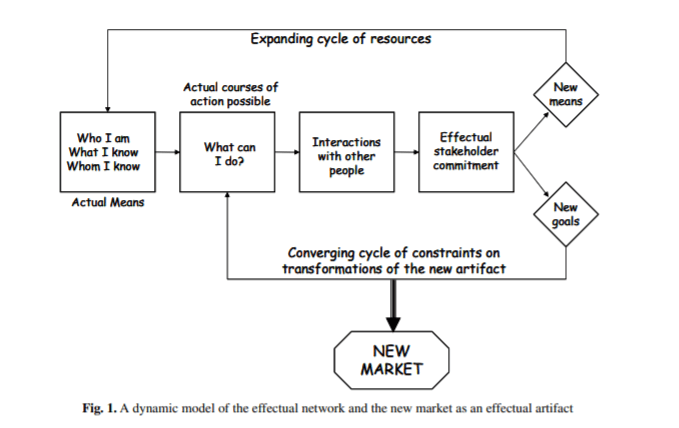
Figure 1 above shows a dynamic model of new markets. This links to the concepts discussed by Bradley et al endowment, trends and moves.
The paper examines the role of stakeholders in the vision of the new market, therefore, selecting stakeholders, based on your vision is key.
Logic models- for planning and evaluating new initiatives and strategies
I have used logic models on multiple occasions to identify need, plan and evaluate CPD programmes within my own context and across other schools. It affords the user the ability to forward plan in problem driven manner.

In this example: (Conceptualizing the societal impact of research in terms of elements of logic models: a survey of researchers in sub-Saharan Africa Nelius Boshoff, and Stefan P. L. de Jong) Logic models reflect a theory of change that serves to unravel the black box of intervention, and clearly separate impacts from the outputs and short- and intermediate-term outcomes of a programme.
In the EEF Implementaiton Guidance Report they outline an example of how Logic models a can be used to conceptualiseand develop an implementation plan:
- why we are doing this—a precise definition of the problem;
- what the intervention entails—for example the active ingredients; stakeholders who will be effected
- how it will be implemented—the implementation activities; stakeholders involved
- a means of knowing how well implementation is going—the implementation outcomes; and
- the final intended outcomes (and so?)—the overall objectives.
This version of Logic modelling offers a structure to plan in the short, medium and long term. Which, when reflecting on the work of Bungay, it avoids a rigid long term deliberate plan and allows for the flexibility of emergence.
Key questions to consider:
- What are ‘new markets’ in the context of education?
- Who are customers and who are consumers?
 Miss Understanding Education